9.00 Conference opening and whakatau
9.15 Conference kaupapa
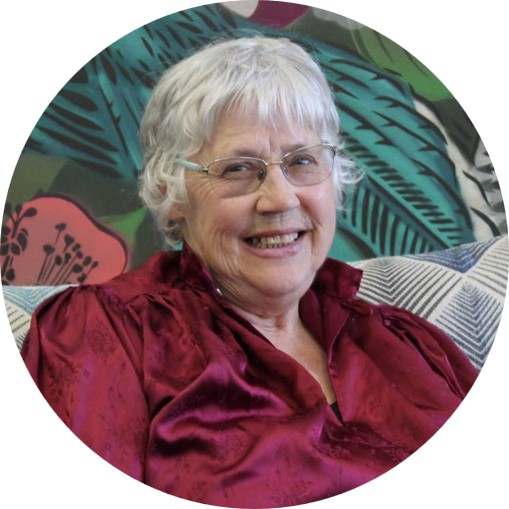
Dr. Carol Peters
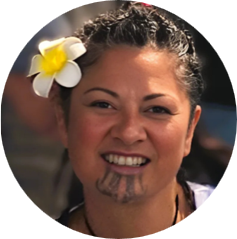
Catherine
Murupaenga-Ikenn
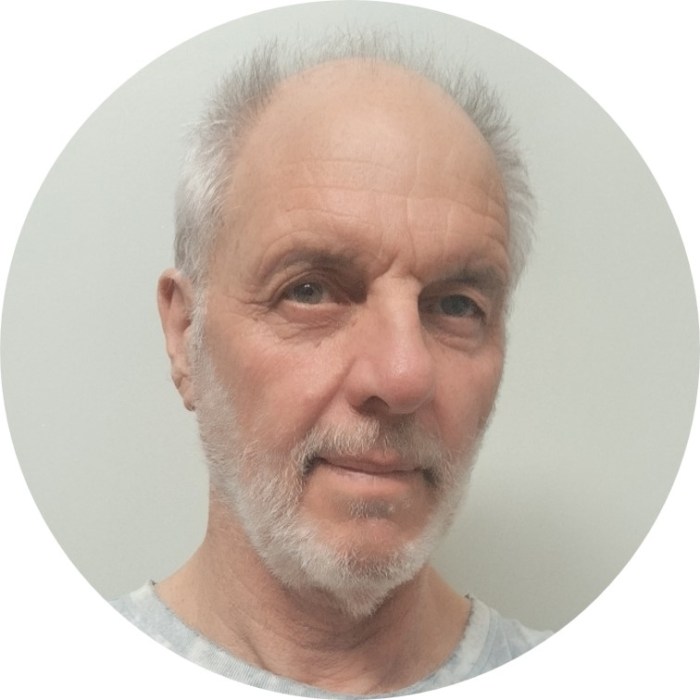
Peter Bruce-Iri
9.30 Keynote: Changing the economic climate
Gareth Hughes
Gareth Hughes is the Director of the Wellbeing Economy Alliance Aotearoa . He is also an author, political commentator and serves in governance roles. Gareth served as a Green Member of Parliament for a decade where he chaired the Social Service and Community Select Committee was the Green Party’s whip and strategist. Prior to Parliament he was a climate campaigner at Greenpeace. For more background see the Gareth Hughes Wikipedia page and the WEALL Aotearoa Website
Climate change is already having a huge economic and social impact and retrofitting sustainability onto an economic system that is unsustainable by design isn’t working to meet our climate goals. How can we build a modern economy operating within planetary boundaries and switch the paradigm from the planet in service to the economy to an economy in service to our planetary needs? Learn about the global and local movement towards a reshaped economy where the rules and incentives are designed to ensure the flourishing of all life on this planet.
10.10 Panel: A climate friendly economy
Our panelists are from three diverse enterprises that are helping to heal the climate. Find out about what they are acheiving and what motivates them.
Panel moderator: Kate Matheson
Lauren Faithfull
Renewables Manager McKay
Lauren’s LinkedIn page
Garth Foote
Regenerative Farmer
Northern Advocate article
Jenny Hill
Intercept
Faceboook Page
10.40 Morning tea and Kōrero
11.20 Kai and economics
Dr Geoff Kira
Dr. Geoff Kira was born and raised in Kaikohe and returned to Northland in 2024 to take on the role of Research Co-ordinator at Te Whatu Ora (Health New Zealand). He has notably contributed to Māori health research in Aotearoa. Prior to his current role, he was a Senior Lecturer at Massey University where he has conducted research related to Māori health outcomes and healthcare delivery. He was then an Associate Professor at Victoria University. Geoff has a longstanding interest in food systems and was a founding member of the Aotearoa Food Policy Network.
11.50 Kai Sovereignty project
The Kai Sovereignty project reference group includes people from the Northland Regional Council, the Whangārei and Far North District Councils, Reconnecting Northland and Climate Action Tai Tokerau. They are briefly introducing the project in preparation for workshopping project themes in the workshop following the afternoon tea break.
The project explores the transition from the current industrial food system to a regenerative food system. It draws on the thinking of people from the north involved in the production, processing, distribution and consumption of food. It then identifies pathways to achieve a regenerative food system. Your input in the afternoon workshop will help to develop the project further.
12.20 Lunch
Afternoon workshops 1.10 to 2.10
Exhibition Hall: Community wealth building and Climate Change
Gareth Hughes
Community Wealth Building is an economic development approach that puts people and place back at the centre of local economies. It ensures wealth generated in a local economy is invested back into that area, putting control and benefits into the hands of local people. This practical workshop will look at successful case studies and use the five pillars of Community Wealth Building as tools to build a healthier economy, environment and communities in Northland and Aotearoa broadly.
Cafler Suite One: Climate and human rights
Elisa Morgera (via video) and Catherine Murupaenga-Ikenn
Today’s economic, food and energy systems are increasingly life-destroying. The root of this decay is often debated, with many pointing to colonisation, corrupt politics, greedy corporations, and a decline in people’s life-nurturing culture and values.
Fundamentally, however, these causes operate within a deeper systemic pathology of ignoring, or enabling the violation of, human rights. For example, labour exploitation for profit maximisation; human suffering from proxy conflicts and wars to perpetuate munitions sales and expand State and private entity control of strategic locations and resources; or rampant environmental destruction for agriculture, energy or other projects and business activities. These are not mere side effects. They are symptoms of a deeper malaise where many in the world are sacrificed to increase power and control in the hands of a privileged few.
Informed by Ms Morgera’s insights, participants will use the remainder of the workshop to brainstorm transformative actions that We in Taitokerau can take to effect urgent change.
Elisa Morgera is the United Nations Special Rapporteur on Climate Change. In the context of her mandate, Ms Morgera will share a short presentation unpacking the heart of this crisis, linking human rights and multi-systems collapse, with a particular focus on economy, food, and energy. In the spirit of ‘think globally, act locally’, she will offer her thoughts on how ordinary citizens can, at the local and community level, drive revolutionary action for good in these increasingly dystopian times.
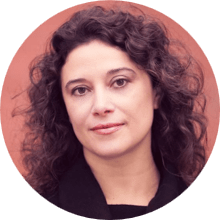
A proud grandmother, Catherine (Te Rarawa and Ngāti Kurī) has been an Indigenous human rights activist most of Her adult life (including environmental, social, economic and climate justice) working in Aotearoa and abroad. She comes with a Master of Laws and two UN Office of the High Commissioner for Human Rights Indigenous Fellowships (2005, and 2020). Currently, Catherine is a Trustee of Climate Change Tai Tokerau Northland Trust, and is an active member of various local and international Indigenous and social justice Networks.
Cafler Suite two: Climate and Health
Dr Geoff Kira
Bounty Room: Climate choir
Lee Morunga
Join the climate choir to learn to sing a few songs together. There are two sessions each day, and the choir will sing during the plenary session.
Local resident Lee Morunga returns after 20 years in Europe, America and Australia touring as a musician. Now back in her home town, she hopes to share her experiences and love for music in our community.

2.10 to 2.40 Afternoon tea
Afternoon workshops 2.40 to 3.40
Exhibition Hall: kai sovereignty pathways
This workshop builds on the Kai Sovereignty project that was introduced in the morning. The pathways identified in the document are practical steps to help us transition to a climate-friendly regenerative food system.
To support those producing, processing, and distributing food, we need to raise a cohort of conscious consumers – people aware of the consequences on our health from the food we eat and where we spend our food dollars.
The workshop will be facilitated by the Reference Group members. Expect plenty of opportunities to have your say.
Cafler Suite One: Te Tiriti and climate change
Moea Armstrong
Network Waitangi Whangārei has been providing community education, information, and support to implement Te Tiriti o Waitangi, since 1988. Their new website gives an indication of what this entails. The group co-publishes Treaty of Waitangi: Questions & Answers, Ngapuhi Speaks, and State of the Pakeha Nation, 20 years of guest essays.
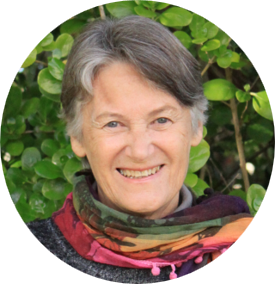
Moea Armstrong is a fifth-generation Pakeha who has facilitated Tiriti and anti-racism workshops in Te Tai Tokerau since 1991. She worked as a journalist with both mainstream and iwi media, and was an environment planner for Ngatiwai Trust Board in the 1990s.
She has been a member of the Green Party for 25 years, with local and national roles. She sees Tiriti-based constitutional transformation as an essential tool to address climate change.
Cafler Suite two: Roots so Deep Part one
Roots So Deep (you can see the devil down there) is a four-part documentary series that explores the world of adaptive cattle farmers and their conventional farming neighbors. Alongside this journey, a team of pioneering scientists conduct groundbreaking research, investigating the costs and benefits of grazing practices in harmony with nature versus those in conflict with it.
We will show the first part of the documentary in this time slot.
Love food hate Waste
Bronte Hamilton
This workshop is at Envirohub, 8 First Avenue – a three-minute walk from Forum North. Please walk there to get there on time for a start. Leave the back of Forum North, walk through the park and over the bridge to First Avenue.
At He Awhi Rito Envirohub Bronte will use food donated from WhakaOra Kai (Food Rescue) to do some demos around how to make the most of the food you have at home with some innovative cooking. Along with tips for better food storage. Participants will get to sample what we make and take home a recipe booklet and Eat Me First stickers.
Bounty Room: Climate Choir
As above
 Climate Action Tai Tokerau