A bigger lever?
Reducing emissions of greenhouse gasses and sequestering carbon is articulated widely as the main tool to mitigate climate change. But this focuses on just one aspect of the atmosphere. In reality, the biosphere plays a massive role in the regulation of climate.
For millions of years, life has been colonising the planet, expressing itself with ever-expanding diversity and reach. With the expansion of biomass, life has created a benign climate – as much as possible on a spherical planet in space.
But humans have been destroying biomass and degrading the moderation of the climate. This destruction has accelerated with the arrival of the industrial age. Our industrial activity also pollutes land, air and water. We can heal the climate by regenerating the biosphere and stop burning fossil fuels.
The hydrological cycle, (the way that water moves through the environment) drives much of the planet’s heat dynamics. This gives us a much bigger lever for mitigating climate change. And for those not convinced, a big part of the remedy for both approaches is very similar – getting atmospheric carbon back into the soil.
These pages focus on the dynamics of direct cooling. They are under construction.
1. How living landscapes regulate Temperature
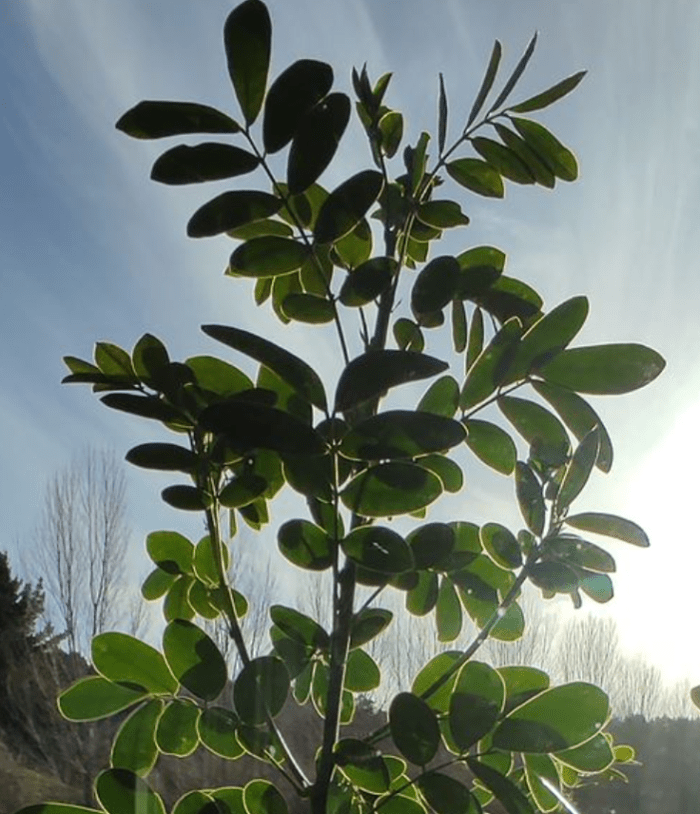
Climate is not determined solely by the composition of the atmosphere. It is shaped by how sunlight interacts with land. Living landscapes regulate temperature by routing energy into water, biology, and vertical transport rather than surface heating.
Regeneration of natural and managed landscapes restores this function. In doing so, it offers one of the most immediate and powerful pathways for stabilising the climate. Read the document.
2. The science of Direct Cooling
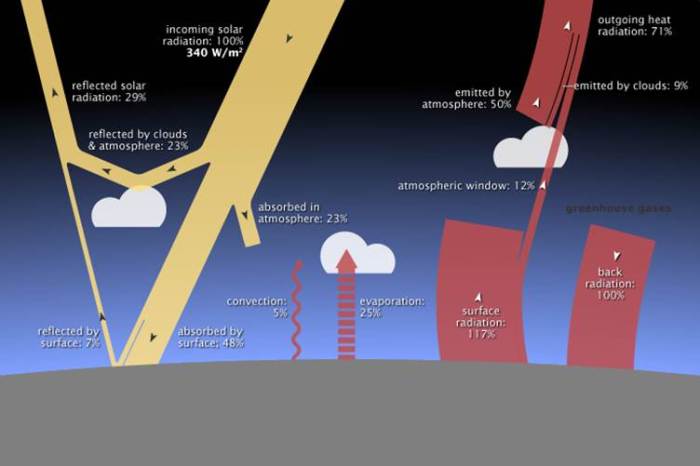
Walter Jehne outlines 10 dynamics that drive the hydrological cycle that helps to explain how we can cool the planet. Click here for the first on these 10 dynamics.
3. Greening Deserts

Desertification impacts on the intensification of sand and dust storms, reduced food security with its dire social consequences and degradation of the landscape. For example, dust levels in Africa have increased by 24.5% since the late 19th Century. These dusts increase atmospheric hazing that leads to further temperature increases. Read more
 Climate Action Tai Tokerau
Thanks for putting together the materials on the site, especially the way you’ve gathered local evidence and references around how vegetation, hydrology, and land management affect temperature and heat dynamics.
I do want to flag a pattern across several of the Direct Cooling pages that deserves careful attention. A number of the posts — including “Direct cooling: A bigger lever?”, “The science of direct cooling”, and the subsequent posts consistently use language about “cooling the climate” or “regulating climate” in ways that do not clearly distinguish between local/regional effects and global planetary climate. For example, descriptions of hydrological processes, latent heat fluxes, or vegetation cooling are framed as though they can offset global warming at the planetary scale, whereas the underlying science supports their importance for regional surface temperature moderation and adaptation benefits, not replacing the role of greenhouse-gas mitigation.
This kind of conflation is subtle but has no place in publications here. Many of the posts present regional surface cooling and enhanced evapotranspiration as if they directly translate into global climate correction. That isn’t what mainstream climate science concludes. Greenhouse forcing from accumulating CO₂ and other gases remains the dominant driver of global mean temperature increases. Framing ecosystem cooling effects as though they control global climate trends without explicitly scoping the claims invites misinterpretation, and in public communication it treads uncomfortably close to language you would not want associated with a credible climate-action organisation.
You have a leadership role in the group, and people will take both the science and the framing at face value. Tightening the language around spatial and temporal scales to make it clear what is regional surface cooling versus what affects global radiative forcing and grounding statements about policy myopia in mainstream literature where appropriate, would strengthen the integrity of the material and reduce the risk of it being read in ways neither you as a trustee and constitution signatory nor the group would want to endorse.
I appreciate the intention behind highlighting biosphere processes and regenerative land management; these are vital for resilience and co-benefits. Clarifying how they complement, not replace, emissions-centric mitigation will make your materials more robust and harder for critics to misinterpret.
Thanks again for the efforts you’ve put into providing resources and helping people engage with climate action and land stewardship locally.
LikeLike
Thanks for your comments, Jesse. What I am saying is that reducing emissions and cooling through ecosystem regeneration are both important. Together they give us more agency, and if we act on them, a better chance of leaving our children and grandchildren a habitable planet.
LikeLike
Thanks Bruce. I agree that both emissions reduction and ecosystem regeneration matter, and that acting on both improves our chances.
My concern is not with that principle, but with how the material on the site is currently framed. Across several of the Direct Cooling pages, the emphasis repeatedly falls on land and hydrological processes as the main lever for “cooling the climate,” while the role of emissions reduction in controlling global temperature trajectories is either backgrounded or treated as secondary, if mentioned at all. That imbalance, combined with language that does not clearly separate regional surface cooling from planetary climate forcing, is what I was trying to draw attention to.
If the intended message is genuinely that regeneration complements rather than rivals emissions-centred mitigation, then I think the pages would benefit from stating that much more explicitly and consistently in the main text, not just in replies or summaries. Right now, a reasonable reader could come away with the impression that restoring landscapes is being presented as a pathway to stabilising global climate in its own right.
Clarifying that distinction in the published materials themselves would go a long way toward resolving the concern I raised.
LikeLike